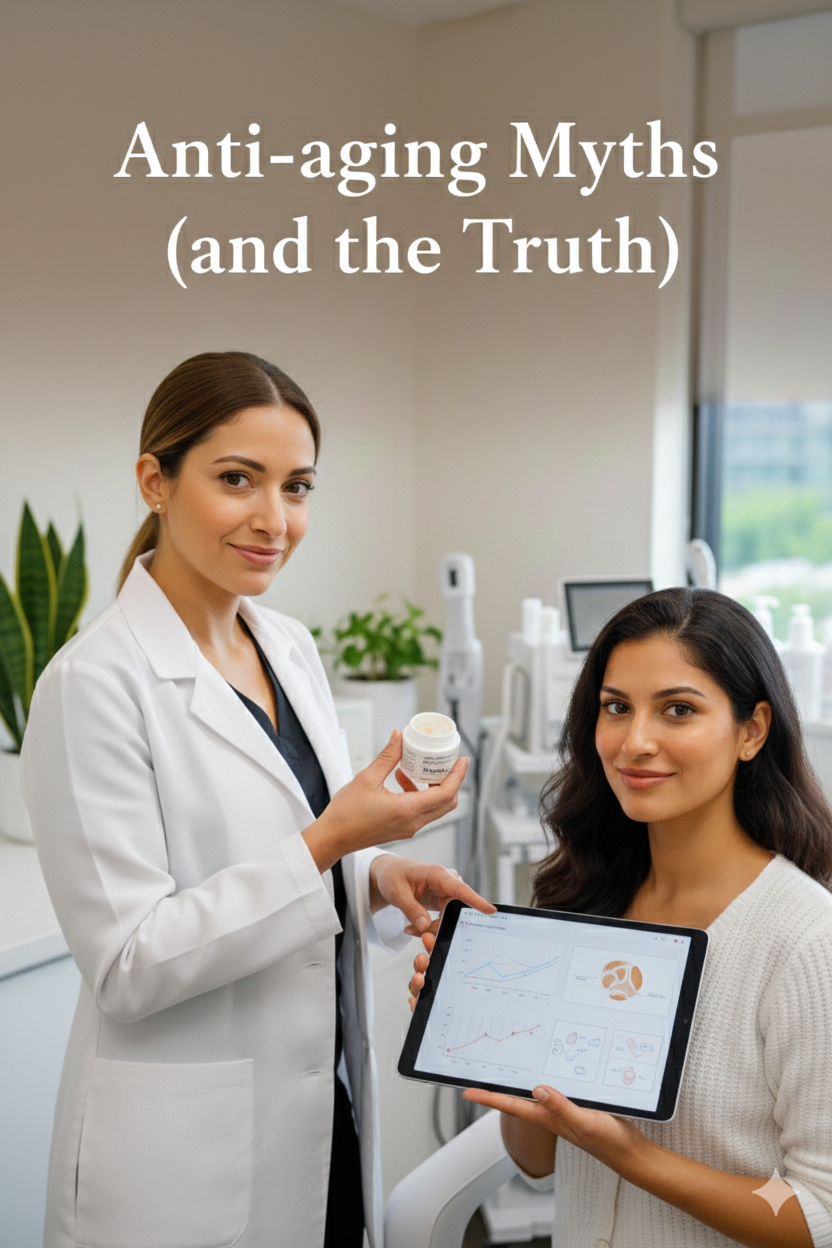
The anti-aging industry is flooded with promises, miracle products, and conflicting advice. As aesthetic medicine specialists, we see clients who've tried everything - from expensive creams to viral TikTok trends - often with disappointing results. Separating evidence-based truth from marketing hype is essential for making informed decisions about your skin health. Here's what actually works, what doesn't, and why.
Myth 1: "Expensive Products Are Always Better"
The Truth: Price doesn't guarantee efficacy. What matters is the concentration of active ingredients, formulation stability, and whether the product addresses your specific concerns. A well-formulated drugstore retinol can outperform an expensive cream with minimal active ingredients.
What to Look For: Check ingredient lists, not price tags. Look for proven actives (retinoids, vitamin C, niacinamide, peptides) in effective concentrations. Medical-grade products often cost more because they contain higher concentrations and pharmaceutical-grade formulations, but mid-range products with quality ingredients can be highly effective.
Myth 2: "You Can 'Reverse' Aging Completely"
The Truth: Aging is a natural, ongoing process. No treatment can stop it entirely, but evidence-based approaches can significantly slow visible signs and improve skin quality. The goal isn't perfection - it's maintaining healthy, radiant skin that looks its best for your age.
Realistic Expectations: Professional treatments and medical-grade skincare can improve texture, reduce fine lines, enhance radiance, and slow further damage. Results are cumulative and require consistency. Think of it as maintaining a high-performance vehicle - regular care preserves function and appearance.
Myth 3: "Natural Ingredients Are Always Safer"
The Truth: "Natural" doesn't mean safe or effective. Many natural ingredients can cause irritation, allergies, or photosensitivity. Conversely, synthetic ingredients are often more stable, purer, and better studied. The best approach combines both - using proven synthetic actives alongside well-formulated natural extracts.
Examples: Retinoids (synthetic) are the gold standard for anti-aging, while botanical extracts like green tea and licorice root provide antioxidant benefits. Both have their place in effective skincare.
Myth 4: "You Only Need Anti-Aging Products After 30"
The Truth: Prevention is more effective than correction. Starting a solid skincare routine in your 20s (or even teens) prevents damage before it becomes visible. Sun protection, gentle exfoliation, and basic hydration lay the foundation for healthy aging.
Age-Appropriate Approach:
- 20s: Sunscreen daily, gentle cleanser, antioxidant serum, basic moisturizer.
- 30s: Add retinol, increase hydration, consider professional treatments for maintenance.
- 40s+: Medical-grade retinoids, growth factors, regular professional treatments, targeted treatments for specific concerns.
Myth 5: "One Product Can Do Everything"
The Truth: No single product addresses all concerns effectively. Different ingredients work through different mechanisms and require different formulations. A comprehensive routine combines multiple actives strategically.
The Effective Approach: Build a routine with targeted products:
- Cleanser (removes impurities without stripping)
- Antioxidant serum (vitamin C for morning protection)
- Retinoid (evening, for cellular renewal)
- Hydrating serum (hyaluronic acid, peptides)
- Moisturizer (barrier support)
- Sunscreen (non-negotiable, every day)
Myth 6: "Professional Treatments Are Only for Severe Cases"
The Truth: Professional treatments are most effective when used preventatively and consistently, not just as damage control. Regular maintenance treatments (every 3-6 months) preserve skin quality and prevent concerns from developing.
Preventative Benefits: Treatments like HydraFacial, gentle peels, and LED therapy improve skin quality before problems become visible. They enhance product penetration, stimulate collagen production, and maintain optimal cellular function. Think of professional treatments as "tune-ups" for your skin.
Myth 7: "You Can 'Fix' Wrinkles with Topical Products Alone"
The Truth: Topical products can improve fine lines and skin texture, but deeper wrinkles and significant volume loss require professional interventions. Retinoids and peptides help, but they work gradually and have limitations.
Combination Approach: The most effective anti-aging strategy combines:
- Topical treatments: Retinoids, antioxidants, peptides for daily maintenance
- Professional treatments: Lasers, peels, PRP for deeper improvements
- Lifestyle factors: Sun protection, nutrition, sleep, stress management
Myth 8: "More Products = Better Results"
The Truth: Overloading your skin with products can cause irritation, compromise the skin barrier, and reduce effectiveness. Less is often more when products are well-chosen and properly applied.
The Right Approach: Start with a solid foundation (cleanser, moisturizer, sunscreen), then add one active ingredient at a time. Allow your skin to adjust before introducing another. A simple, consistent routine outperforms a complex, inconsistent one.
What Actually Works: Evidence-Based Anti-Aging
Based on decades of research and clinical practice, these approaches deliver measurable results:
1. Sun Protection (The #1 Anti-Aging Tool)
UV radiation causes up to 90% of visible aging. Daily, broad-spectrum sunscreen (SPF 30+) is non-negotiable, regardless of weather or indoor/outdoor activity. UV rays penetrate clouds and windows, causing cumulative damage.
2. Retinoids (The Gold Standard)
Retinoids (vitamin A derivatives) are the most studied and proven anti-aging ingredients. They increase cell turnover, stimulate collagen production, reduce fine lines, and improve texture. Start with retinol, progress to prescription retinoids under medical supervision.
3. Antioxidants
Vitamin C, vitamin E, ferulic acid, and other antioxidants neutralize free radicals, reduce inflammation, and support collagen synthesis. Use in the morning under sunscreen for maximum protection.
4. Professional Treatments
Regular professional treatments (lasers, peels, HydraFacial, PRP) provide results that topical products alone cannot achieve. They work at deeper levels, remove accumulated damage, and create optimal conditions for home care to be more effective.
5. Lifestyle Factors
- Sleep: Quality sleep allows cellular repair and reduces inflammation.
- Nutrition: Antioxidant-rich foods, adequate protein, and hydration support skin health.
- Stress management: Chronic stress increases cortisol, which breaks down collagen.
- Smoking cessation: Smoking accelerates aging through multiple mechanisms.
The Bottom Line
Effective anti-aging isn't about finding a miracle product or following trends. It's about evidence-based choices, consistency, and a holistic approach that combines quality skincare, professional treatments, and healthy lifestyle habits. The best anti-aging strategy is one you can maintain long-term - realistic, sustainable, and aligned with your individual needs and goals.
At Ivory Skin Clinic, we believe in transparency and education. During consultations, we explain the science behind treatments, help you understand what's realistic, and create personalized plans that combine professional expertise with practical, sustainable home care.
Ready to Build Your Evidence-Based Anti-Aging Routine?
Schedule a consultation with Dr. Sharmila Senanayake to receive personalized recommendations based on your skin's unique needs and evidence-based practices.
Book Your Consultation